
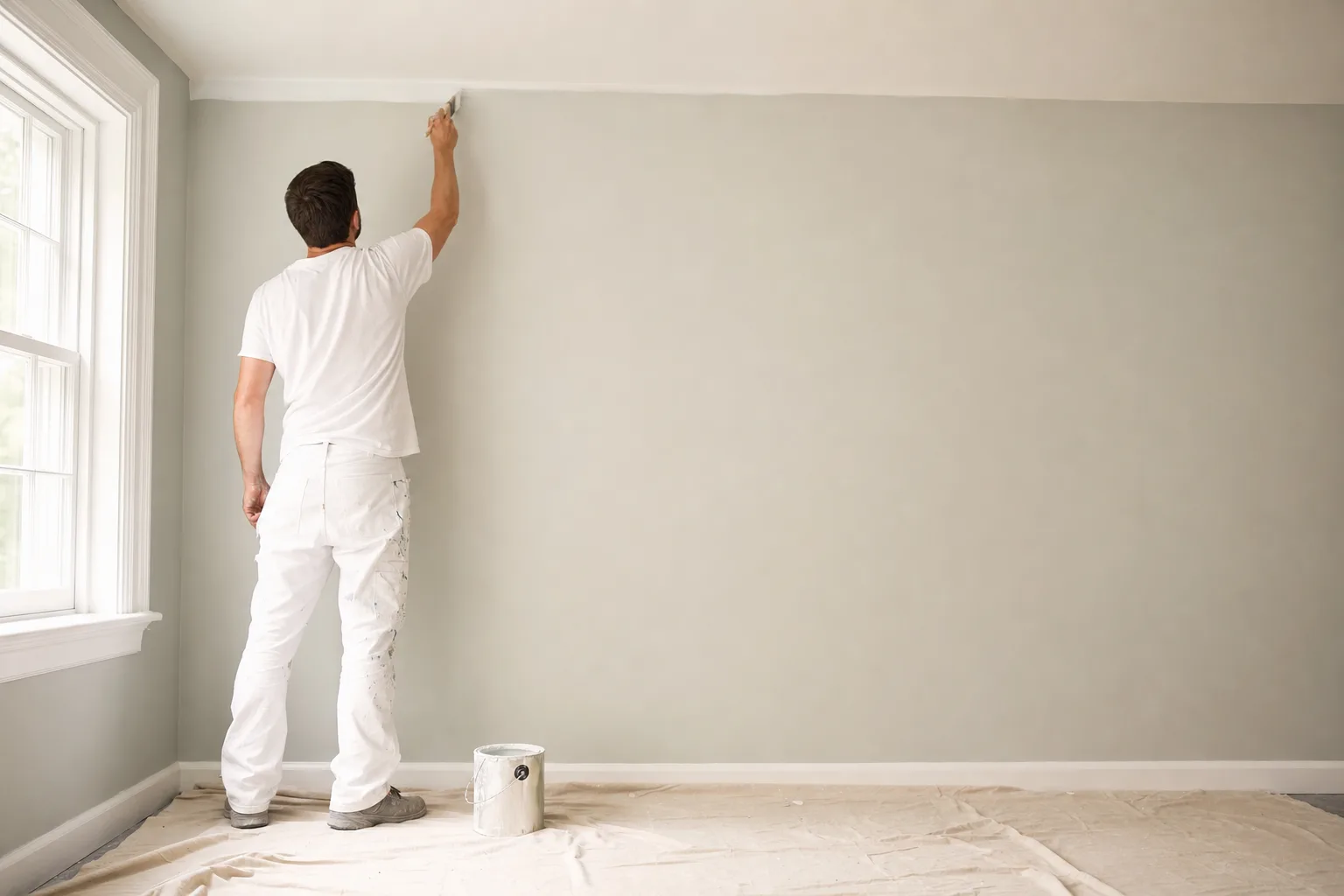
When painting a house, where do you start? Without a clear plan, it’s easy to waste time, make a mess, or end up with results that don’t look professional.
Starting in the wrong place can lead to drips, smudges, or the need to repaint entire sections. Many homeowners dive in without knowing the right order or tools to use, only to regret it halfway through the job.
The good news is that with a little planning, painting your home can be smooth, efficient, and even enjoyable. In this blog post, we’ll answer common questions like:
-
When painting inside a house where do you start?
-
What part of the house do you paint first?
-
Should I paint baseboards or walls first?
As professional interior painters we’ll also share our best tips on prepping your space, choosing the right tools, and avoiding common painting mistakes.
Planning Ahead Before You Start Painting
Before you start painting, take the time to plan. Proper prep work makes a big difference in how your project turns out.
Gather your tools and supplies:
-
Paint (use a calculator to estimate how much you need)
-
Paint brushes and rollers
-
Painter’s tape
-
Drop cloths
-
Paint tray and liners
-
Sandpaper and spackle for small repairs
-
Primer (especially for bare walls or color changes)
Protect your space:
-
Move furniture or cover it with plastic or drop cloths
-
Cover all floors with drop cloths
-
Tape off trim, outlets, windows, and baseboards
Clean the surfaces: Dirt, grease, and dust stop paint from sticking properly. Wipe everything down with a mild cleaner. Patch any holes or cracks and sand them smoothly.
Why it matters: Skipping prep can lead to peeling paint, streaks, or stains bleeding through. Regretfully, it can make the time between needing to paint shorter if not done properly.
When Painting a House, Where Do You Start?
Start at the top and work your way down. By that we mean you should always begin with the ceilings. This prevents paint drips from ruining freshly painted areas below.
Take your time! Minimizing drips, touchups and messes saves clean up time and helps achieve the nice finish you had in mind.
The best order to follow:
-
Ceilings – Use a roller with an extension pole for even coverage.
-
Walls – Once the ceiling dries, move on to the walls.
-
Trim and baseboards – These come next after walls are done.
-
Doors and windows – Finish with detailed work last.
Use painter’s tape along edges for clean lines. It also protects finished areas as you move through each step.
Should I Paint Baseboards or Walls First?
Paint the walls first, then the baseboards (remember: top to bottom).
It’s easier to get a clean line this way. Once the wall paint dries, apply painter’s tape to the wall where it meets the baseboards and paint them carefully.
Why this works better:
-
Taping walls is easier than taping thin baseboards.
-
You won’t risk getting baseboard paint on the walls.
-
It looks cleaner and saves time.
Additional Pro Tips for a Clean Finish
There are small things you can do to achieve a beautiful finish. These small tips make a big difference:
-
Use primer for better paint adhesion and longer-lasting results.
-
Let each coat dry fully—usually 2 to 4 hours (check the paint can label).
-
Use angled brushes for trim and edges.
-
Invest in quality tools—better quality brushes and rollers give smoother results and reduce streaks.
-
Paint using smooth, even brush strokes and thin coats of paint.
Common Mistakes to Avoid
Even simple jobs can go wrong without the right prep. Watch out for these mistakes that can easily be overlooked:
-
Skipping surface prep.
-
Applying paint too thickly to save time. This leaves a messy finish.
-
Not using painter’s tape.
-
Rushing between coats. Allow coats to try thoroughly.
Conclusion and Final Thoughts
A fresh coat of paint goes a long way to updating and freshening up your home’s interior. But it doesn’t have to be stressful. Follow the simple steps listed above, painting top to bottom—ceilings, walls, trim, doors—and prep every surface properly. And take your time! The result will be cleaner lines, fewer touch-ups, and a better-looking finish.
After painting, many homeowners ask how to get paint smell out of house quickly. The key is ventilation—open windows, run fans, and consider placing bowls of baking soda or activated charcoal around the room to absorb lingering odors.
Not into DIY painting? If you’re in Mobile or Baldwin County, Pro 1 Painters is here to help with professional painting services . Whether it’s one room or your entire house, we make it easier to get the results you want. Contact us today for a free quote .