
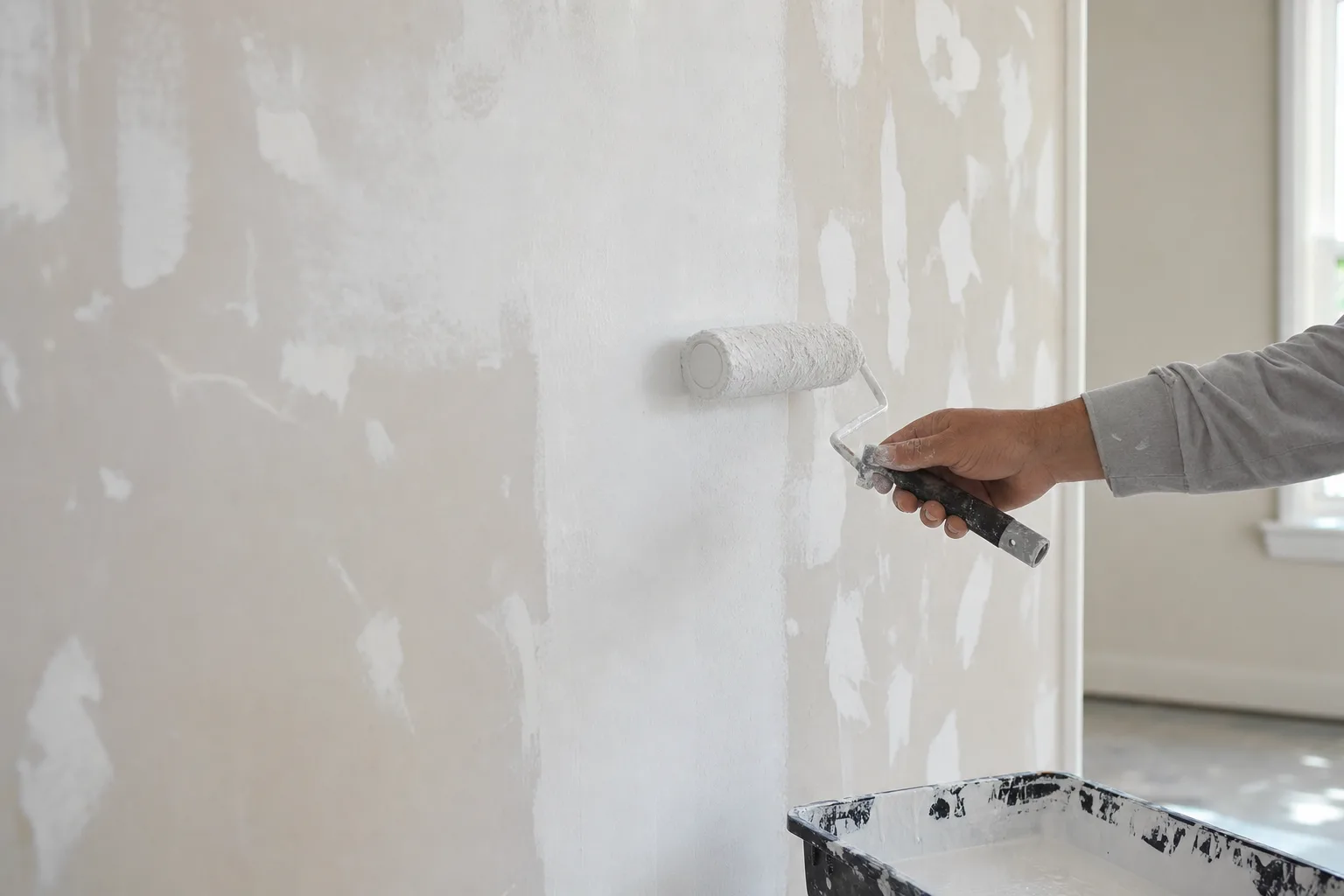
You’re ready to paint—but do you really need to prime first? It’s a common question: Is priming before painting necessary? With all the “paint and primer in one” products out there, it’s easy to think primer is a thing of the past. But skipping it can lead to peeling, streaks, and wasted money.
Modern paints are better than they used to be. But they’re not a fix-all. In many cases—especially with new drywall, drastic color changes, or glossy surfaces—primer still plays a key role. Priming is often one of the most important steps of prep work before beginning a paint project.
This guide clears up the confusion. We’ll explain exactly when to prime before painting, when you can skip it, and how to choose the right type. Whether you’re painting a single room, repainting your home, or working with professional interior painters , this will help you get better results without guessing.
Table of Contents
- When You Can Skip Priming
- When Priming is Essential
- Choosing the Right Primer
- Professional Tips and Money-Saving Advice
- Know When to Prime for a Longer-Lasting Paint Job
When You Can Skip Priming
Wondering when you need to prime a wall before painting and when you don’t? Here are the situations where priming may not be necessary.
Previously Painted Walls in Good Condition
If the surface is clean, dry, and smooth—with no peeling, stains, or patches—you can probably skip primer. This is especially true if:
- The previous paint is flat or eggshell finish (not glossy).
- You’re painting with the same type of paint (latex over latex).
- The color change is minimal.
RELATED: How to Touch Up Scuffs and Marks on Painted Walls
Minor Color Changes
If you’re repainting a wall with a similar shade or going from light to darker, you likely don’t need a primer. Two coats of quality paint should be enough. Just make sure the existing wall is in good shape.
High-Quality Paint with Built-in Primer
Some paints include primer in the formula. These can work fine when:
- The surface is already painted.
- There are no stains or patches.
- The paint color isn’t changing much.
Keep in mind: These products won’t block stains or seal porous surfaces. Think of them more as an extra coat of paint—not a substitute for true primer.
When Priming is Essential
There are certain times when priming is non-negotiable. Here’s when to prime before painting, no exceptions.
Porous Surfaces
New drywall, bare wood, masonry, and even repaired areas will absorb paint unevenly without primer. You’ll end up with a patchy, dull finish.
- New drywall – Use Zinsser 123 Water-Based Primer.
- Bare wood – Use Zinsser Oil-Based Cover-Stain Primer.
- Masonry – Use a high-quality masonry primer to prevent efflorescence and adhesion issues.
Why it matters: Porous materials soak up paint fast, leading to poor coverage and uneven sheen or “flashing.” The primer seals the surface and saves the time it takes to repaint and additional paint costs.
Drastic Color Changes
Painting over a dark or bold color? Primer helps hide the old paint and makes the new one look the way it should, giving you the professional finish you want.Going from a dark paint color to light? A primer is a good idea. For example, painting from navy blue to white—or bright red to beige. Try using Zinsser Oil-Based Cover-Stain Primer before painting. Generally, use a primer when going from a bright color to a neutral. Also, when covering bold patterns or designs on a wall, a primer helps to cover that nicely. Want a pro tip? Tint your primer to a shade close to your new paint color to improve coverage.
Here’s a real story: A customer tried painting over a red and blue baseball mural without primer. Even after three coats, the old design showed through. That is a lot of wasted time and money on paint. Three strikes, you’re out. Go with the primer!
Stained or Damaged Surfaces
Got painted walls with smoke damage, water stains, crayon, grease or other imperfections? Sealing these surfaces with primer will save you time and money. Painting them alone won’t cover or block the blemishes.We recommend Zinsser Oil-Based Primer for mild stains and Zinsser B-I-N Shellac Primer for more complex problems like water damage, smoke, or pet odors. Shellac-based primers are the best at sealing damage and locking in tough smells. Sealing off the surfaces with a primer is part of proper prepping and achieving a professional finish.
Smooth or Glossy Surfaces
The smoother the surface the more challenging it becomes to have paint adhere to it (especially oil-based paint). These surfaces require a bonding primer to do the job right. Even if the finished job looks great, it won’t last long! Paint alone won’t stick well to slick surfaces like:
- Glass
- Laminate
- Tile
- Glossy paint (like trim or doors)
- Cabinets are especially tricky because of their slick finishes, which is why many homeowners rely on kitchen cabinet painters for proper prep and long-lasting results.
- Vinyl
Prepping is everything. Lightly sand first, then apply a bonding primer like INSL-X STIX. Tip: You cannot apply latex paint directly over oil-based paint without a primer. To test the surface, rub it with a cotton ball soaked in isopropyl alcohol. If nothing comes off, it’s oil-based. Solution: Use a bonding primer before switching to latex paint.
Odor Issues
Long-lasting odors can be a real challenge to cover up! If you’re painting over smoke, pet, or food odors or cooking smells around the stove, use shellac-based primer. Zinsser B-I-N is excellent at sealing in smells and preparing the surface for paint.
RELATED: Simple Tips for How to Get Rid of Paint Smell in Your House
Choosing the Right Primer
When selecting a primer, choose one that is high quality. Still unsure when to use a primer before painting? All primers are not the same. It helps to know which primer does what.
Water-Based Primers
Water-based primers, like Zinsser 123, have their advantages. These are best for:
- New drywall
- Lightly stained walls
- Easy cleanup and low odor
Avoid these primers for:
- Walls with heavy stains
- Glossy or slick surfaces
Oil-Based Primers
These primers provide a versatile option. Ones like Zinsser Cover-Stain are best for:
- Bare wood
- Medium-level stains
- Surfaces where stronger adhesion is needed
Tip: These oil-based paints require proper ventilation and paint thinner for cleanup. Make sure to open windows and run fans to minimize odors.
Shellac Primers
Shellac primers like Zinsser B-I-N are more expensive, but very effective. These are best for:
- Smoke, water, pet stains
- Sealing strong odors
Bonding Primers
Bonding primers like INSL-X STIX are perfect for glossy or tricky surfaces including PVC, tile, vinyl, and metal.
Masonry Primers
Masonry primers are designed for use on concrete, stucco, and brick. These primers help handle high pH and prevent peeling or bubbling.
RELATED: How to Paint a Stucco House Like a Pro
Tip: It is important to remember that paint and primer together are convenient and are good for use on smooth, previously painted surfaces and not good for new drywall, drastic color changes, glossy surfaces, or stains. The right primer can make all the difference in how your paint project turns out. Think of it as paint with a little extra hiding power—not a replacement for real primer.
Professional Tips and Money-Saving Advice
- Primer is cheaper than paint. One coat of primer and two coats of paint will cost less than three coats of paint.
- Spot prime patched or stained areas before painting.
- Always prep properly — clean surfaces, sand glossy areas.
- Don’t skip primer just because the paint says “self-priming.”
- Test small areas if you’re unsure.
- Tint your primer for better coverage during big color changes.
Still not sure what to use? Ask professional house painters or bring a photo of your project to the paint store.
Does priming matter more in a humid coastal climate?
It does. On the Gulf Coast, walls and woodwork take on more moisture than they do in a dry climate, and storm-season water stains are a regular sight on Mobile ceilings. In the older homes around Midtown, Spring Hill, and Old Dauphin Way, we run into bare plaster, slick oil-based trim, and water-stained drywall all the time — exactly the surfaces that need a proper sealing or bonding primer to hold up. Across Mobile and Mobile County, we'd rather spend a coat of primer up front than watch a skipped step bleed through or peel a year later in the humidity.
Know When to Prime for a Longer-Lasting Paint Job
Knowing when to prime before painting makes all the difference. And knowing what type of primer you need is important.
Priming is essential on porous, stained, or glossy surfaces—and when making big color changes. You can skip priming if your walls are already painted, clean, and you’re using a similar color with quality paint.
Don’t rely on paint labels alone. Look at the surface, the condition, and your goal. If you’re ever unsure, test a small spot. Prep smart and your paint job will look better and last longer.
Not a DIYer? Our experienced team has the knowledge and tools to handle your paint project. Contact Pro 1 Painters today!