
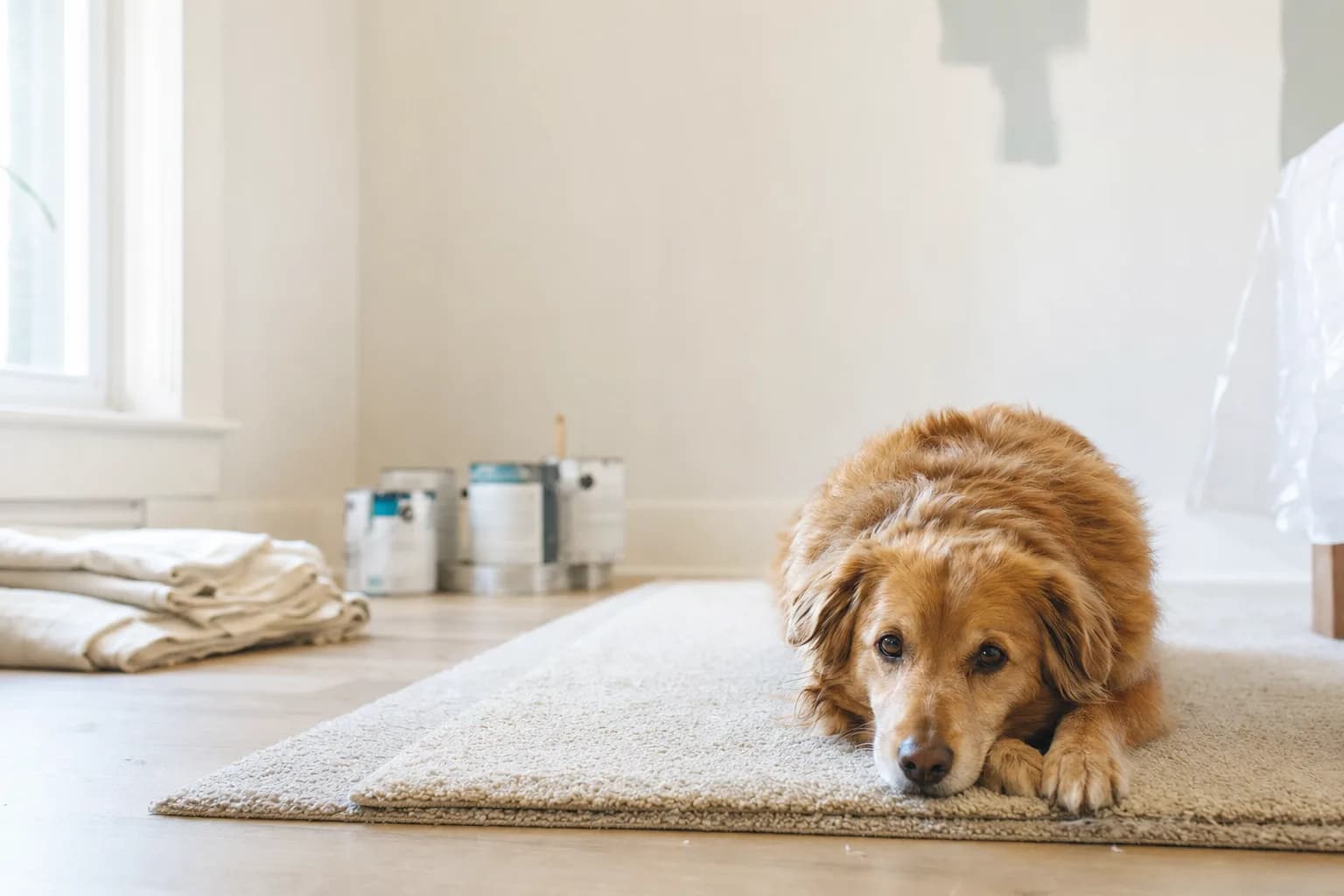
Painting your home is a great way to give your space a fresh look. But if you have pets, you need to be extra cautious. Animals are sensitive to paint fumes, chemicals, and even noise from a typical painting project.
Some pets can experience respiratory issues, and some toxic paint chemicals can be deadly to birds and pose a danger to dogs and cats.
The good news? With the right preparation and by using paints safe for pets, you can complete your painting job without putting your furry, feathered, or scaled companions at risk. This guide walks through everything you need to know.
If you want the room handled for you, compare the full interior-painting process or the service details for interior painting in Mobile. Product labels and your veterinarian should control pet-specific safety decisions.
Understanding Paint Safety for Pets
Pets are part of the family—and their safety matters during home improvement projects. While paint may seem harmless, it often contains chemicals that can cause health problems in animals.
By choosing the right products and planning ahead, you can make the process safer. Look for paints safe for pets, set up proper ventilation, and take basic safety steps to protect your pets while your home gets its refresh.
What paint is safe for pets?
The best options are:
-
Low-VOC or zero-VOC paints – These produce fewer harmful fumes and are widely used in homes with children and pets. (If you're weighing the trade-offs, here's whether low-VOC and zero-VOC paint is worth it.)
-
Water-based paints – Paints like latex and acrylic are much safer than oil-based alternatives. (These are also easier to wash off.)
-
Pet-safe brands – Some paint manufacturers offer lines specifically marked as non-toxic or pet-safe. Always read the label.
-
Eco-friendly, milk-based paints are made entirely of natural ingredients and are the safest paints you can use around your pets. This type of paint does not release toxins into the air.
This is especially important in colder climates or seasons when windows stay closed and fresh air is limited.
As with any painting project, the best time of year to paint your home’s exterior is in moderate weather with temperatures in the 50s-70s, sunny and low humidity.
Are acrylic paints toxic to pets?
Acrylic paints are water-based and generally considered low-risk. However:
-
Wet, acrylic paint can still be harmful if inhaled or licked.
-
Once it is fully dried and cured, it’s usually safe for pets.
-
Prevent pets from chewing or scratching newly painted surfaces.
Is non-toxic paint safe for pets?
The term “non-toxic” means a product is less likely to cause harm, but it doesn’t mean it’s completely safe.
-
Pets can still react to ingredients or strong odors.
-
Always treat wet paint as unsafe, even if it’s labeled non-toxic.
-
Let paint dry fully and ventilate the area before allowing pets back in.
Pre-Painting Preparation
Before you begin painting, take the time to set for safety:
-
Choose a pet-safe paint – Select paint with a low-VOC (volatile organic compounds) or zero-VOC formulas.
-
Move pets to a separate area – Set up a quiet, comfortable space far from the painting zone.
-
Ventilate the space well – Open windows and use fans to keep air moving.
-
Gather painting supplies ahead of time – This reduces back-and-forth movement and distractions.
-
Cover nearby surfaces – Protect floors and furniture, even in nearby rooms your pet might access.
Planning ahead will reduce exposure and help your project go smoothly. But if you’d rather leave the job to experts, our team specializes in professional interior painting .
During the Painting Process
While painting with pets:
-
Keep pets in a separate, well-ventilated room – They should not be near the fumes or supplies.
-
Use barriers – Baby gates or closed doors can keep pets from entering the painting area.
-
Watch for signs of discomfort – Coughing, squinting, or hiding could be signs your pet is reacting to fumes.
-
Avoid extreme heat or humidity – These conditions slow drying time and allow fumes to linger. Also, avoid placing pets outdoors for extended periods of time during hot or humid conditions to keep them safe during your project.
Supervise pets closely if they’re anywhere near the workspace, even just in an adjacent hallway. Give them plenty of bathroom breaks outside, if necessary, access to clean water and comfy space. Make sure all spaces are well ventilated.
After Painting is Complete
Even after the last coat is done, your work isn’t over when it comes to pet safety:
-
Let the paint fully dry and cure – This usually takes 24–48 hours. Check the product label for specific drying times. Oil-based paints take longer to dry while water-based paints may take less time.
-
Keep the area ventilated – Continue running fans or keeping windows open to clear out lingering fumes. For additional tips, read our guide on simple ways to get rid of paint smell in your house.
-
Remove all painting tools and supplies immediately – Brushes, trays, and cloths can still be hazardous.
-
Inspect painted areas – Make sure pets can’t lick or scratch baseboards, window sills or any areas that aren’t completely dry.
-
Reintroduce pets gradually – Bring them back into the painted area only when you’re confident it’s safe.
-
Keep the unused paint with a secure lid out of the reach of pets.
Additional Safety Tips for Keeping Your Pets Safe When Painting
Here are a few more ways to keep pets safe:
-
Store paints and tools securely – Keep everything out of reach, even after cleanup.
-
Clean brushes and rollers in a pet-free area – An outdoor sink or garage is ideal.
-
Use odor-neutralizing products – Only if they are labeled safe for pets.
-
Keep food, water, and litter boxes far from painting areas.
-
Some latex paints contain small amounts of ethylene glycol (antifreeze), which is toxic to dogs if ingested. Be sure and check the paint can label for ingredients.
-
If a dog gets paint on themselves, wash off immediately with dog-safe shampoo. (Paint thinner and turpentine are toxic to dogs!)
-
Use clippers (not scissors) to remove any dried paint you notice on your pet.
-
If you suspect that your pet has ingested any toxin including paint, paint thinner or primer visit the Pet Poison Control Hotline
If you have birds, reptiles, fish, or small mammals, take extra care. These animals are highly sensitive to changes in air quality. If possible, move them to a different room—or even out of the home temporarily. Ask a family member to keep them at their home temporarily.
Does Mobile's climate change how you paint around pets?
A little, yes. Our long, humid Gulf Coast summers slow drying and let fumes linger longer, so the 24–48 hour cure window can stretch — keep pets out and the fans running until the room is truly dry, not just dry to the touch. The flip side is that Mobile's mild stretches in spring and fall are ideal for opening the windows wide and airing a room out fast, which is the single best thing you can do for a pet during a paint job. We've painted around dogs, cats, and the occasional bird in homes all over Mobile County, from Midtown and Spring Hill to West Mobile, and the routine is the same everywhere: separate, ventilate, and let it cure before they come back in. If you've got little ones underfoot too, our guide to painting with kids and pets in the house safely covers the rest.
Final Thoughts on Selecting Paints Safe for Pets
Painting your home doesn’t mean putting your pets at risk. With the right pet-safe paints, smart planning, and a few simple precautions, you can complete your project safely.
Although pet safe paint can be more expensive, your pet’s health should not be compromised (or lead to expensive vet bills).
By keeping them away from fumes and paint and using low- or no VOC products, you can get the look you want without putting your pets in harm’s way.
If you decide to hire professional house painters with the knowledge and experience to get the job completed quickly, then click here to request a free estimate today . ‘Fido’ will look forward to more walks in all your free time!