
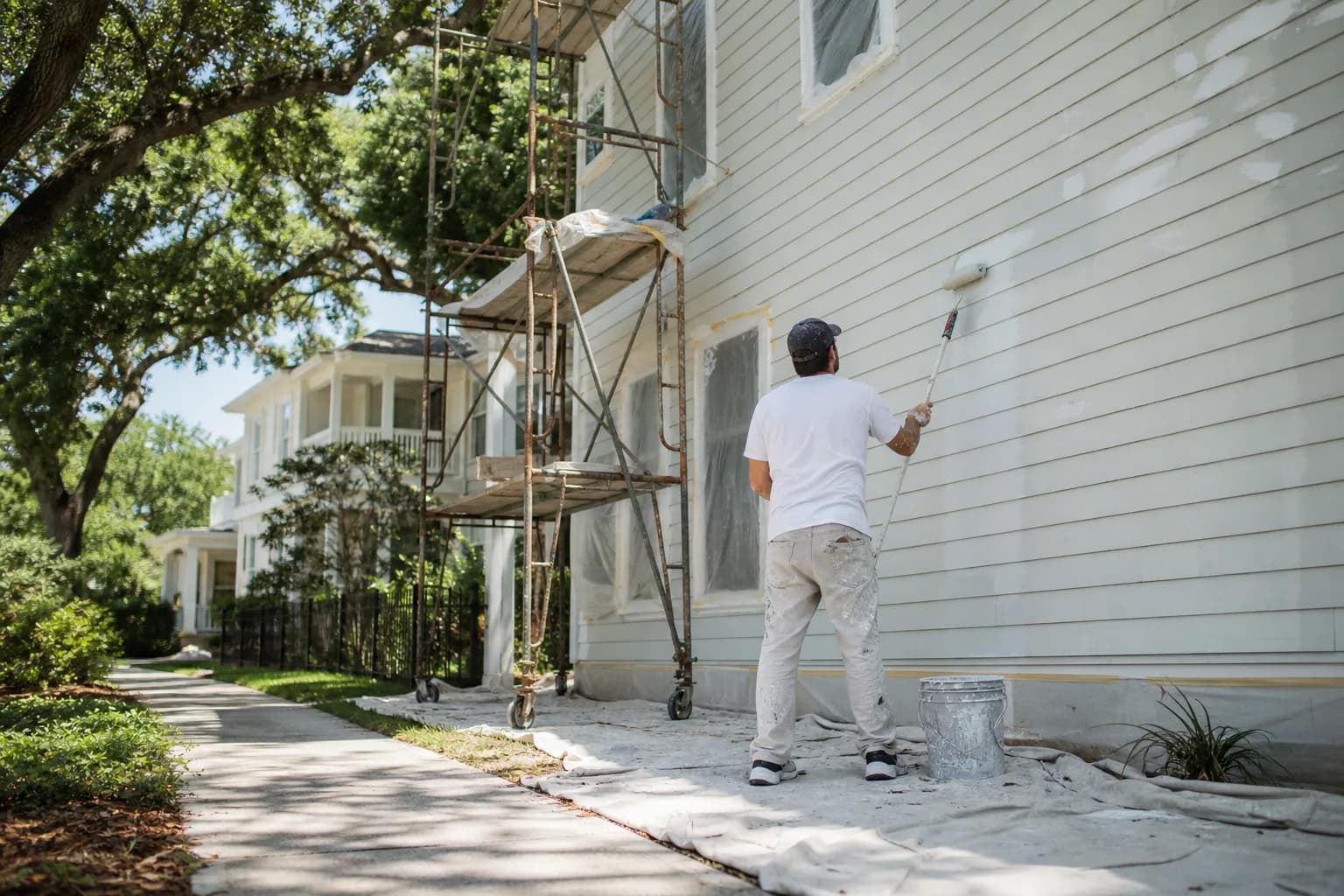
You get a number for painting your house and it lands higher than you guessed — or two painters quote the same place and the totals are a thousand dollars apart. Before you can tell a fair price from a padded one, it helps to know what you're actually paying for. A paint job isn't one cost. It's a stack of them, and a few specific factors do most of the moving.
Here's what drives painting cost on a whole-house project, roughly in the order each one matters — so when you read a quote, you can see exactly where your money is going and why one home costs more than another.
What drives painting cost: the big factors first
Answer first: the two factors that move a painting price the most are how much surface there is to paint and what condition that surface is in. Everything else — height, coats, product, color — adjusts the number from there. A 1,200-square-foot home with sound, paint-ready walls can genuinely cost less than a 1,000-square-foot one that needs scraping, wood repair, and priming before a drop of finish goes on.
That's the part homeowners miss when they compare two houses by size alone. Square footage sets the starting point because it sets the labor hours and the gallons. But condition is the wild card. Peeling paint, chalky old finishes, soft or rotted wood, mildew, and bare patches all add prep time, and prep is where a coastal paint job lives or dies. Two homes the same size can be a day apart in labor before anyone opens a can. If you want the full local picture with real ranges, our cost to paint a house in Mobile and Baldwin County guide lays out what a fair number looks like here.
The factors that affect painting cost, one by one
Most of what makes one house cost more than another comes down to a handful of levers. Here they are in plain terms, in roughly the order they move the price.
Surface area and square footage
More wall, trim, ceiling, and siding means more labor and more paint. It's the baseline every quote starts from. A two-story exterior or a home with lots of trim, dormers, and detail carries more surface than its floor plan suggests.Surface condition and repairs
Sound, clean walls paint fast. Peeling paint, chalky finishes, mildew, caulk failures, and soft or rotted wood all add prep and carpentry time before painting even begins — often the single biggest swing between two homes the same size.Prep depth
Washing, scraping, sanding, caulking, masking, and priming is most of the labor on a job built to last. The deeper the prep a surface needs, the higher the cost — and it's the line that protects everything you pay for after it.Height and access
A single-story ranch is quick to reach. A two- or three-story exterior, steep rooflines, or walls over a deck or slope need ladders, scaffolding, or a lift, plus the extra time and safety setup that go with working up high.Number of coats
Two coats is the standard for even color and durability. Bare wood, big color changes, and bold existing colors often need a primer coat first — so a job can run three coats of material and labor instead of two.Paint and product grade
A premium paint built for heat, humidity, and UV costs more per gallon than builder-grade and lasts far longer. Specialty products — mildew-resistant, elastomeric, high-hide primers — add cost where the home actually needs them.Color and finish choices
Deep, saturated colors and certain sheens can need an extra coat to cover evenly. Multiple colors, accent walls, and detailed trim work add cutting-in time. A simple palette close to what's there is the most economical.
The pattern is worth noticing: almost every cost driver is about labor or coverage, not the price of paint. That's why the number on a real quote reflects days of skilled work, not a trip to the paint store.
Why is labor, not paint, most of the cost?
Here's the part that surprises people most: on a typical house painting project, the paint itself is a small share of the total. The rest is labor — and labor is what you're really buying.
Think about what a lasting job takes. Before any finish goes on, the crew pressure-washes, scrapes failing paint to a sound edge, sands rough spots, treats and repairs soft wood, caulks gaps and seams, masks off everything that isn't getting painted, and primes bare and patched areas. Only then do two coats go on, cut in by hand around every edge. That's days of skilled work, and it's why a fair quote can't look cheap. A painter who comes in dramatically low usually got there by removing labor — fewer prep steps, one coat, surfaces left out — not by finding a discount on a can of paint. The factors that make painting "expensive" are the same ones that make it last.
Interior vs. exterior: different cost drivers
Inside and outside, the same factors apply — but they weigh differently, which is why an interior and an exterior of the same house rarely cost the same.
Exteriors tend to carry the heavier cost drivers on the Gulf Coast. Height and access come into play the moment you go past one story. Surfaces take a beating from sun, salt air, and humidity, so prep runs deeper — more washing, more scraping, more failed-caulk and soft-wood repair. And weather sets the schedule, since a coastal afternoon storm can stall a coat. Interiors trade those for a different set: protecting and moving furniture, covering floors, cutting in clean lines around trim and ceilings, and working room by room while you still live there. Neither is automatically cheaper — it comes down to which drivers your home actually has. If you're scoping just one space, our breakdown of the cost to paint a room shows how those same drivers shrink down to a single bedroom or living room.
| Cost driver | Pushes the price up when… | Holds the price down when… |
|---|---|---|
| Surface area | Two-plus stories, lots of trim and detail | Single story, simple footprint |
| Condition | Peeling, chalky, mildew, soft wood, bare spots | Sound, clean, paint-ready surfaces |
| Prep depth | Heavy scraping, repair, and priming needed | A wash and light prep is enough |
| Access | Tall walls, steep roofs, decks, slopes | Everything reachable from a short ladder |
| Coats | Color change or bare surfaces (primer + two) | Refresh of a similar color (two coats) |
| Product | Premium or specialty paint the home needs | Standard premium line, no specialty products |
How to manage the cost without cutting the job
The smart way to bring a painting cost down is to paint fewer surfaces, never thinner ones. Defer a room or an elevation you can live with for now. Pick a color close to what's already on the wall so you skip a primer coat. Clear and move your own furniture, and handle small repairs you're comfortable with before the crew arrives. Each of those trims real cost without touching the parts that make the finish last.
What you never want to cut is prep or coats. That's the line where saving money turns into spending it twice, because a job that skips those fails early on the coast and has to be redone. If a number ever looks too good to be true, our guide on why the lowest painting bid costs you more shows exactly which corners a cheap quote tends to hide, and does prep work cost more than the paint breaks down why the invisible labor is most of the bill. Gathering more than one number helps too — how many painting quotes you should get covers what a useful comparison actually takes.
The bottom line
A house painting project's cost isn't one figure — it's surface area, condition, prep, height, coats, product, and color, stacked together, with labor doing most of the lifting. Once you can see those levers, a quote stops being a mystery number and starts being a story you can read: this home needed more prep, that one's two stories, this one's a bold color change. Fair pricing follows the work.
When you want a number built on your actual home rather than a guess, that's what an in-home estimate is for. Pro 1 Painters has been family-owned on the Gulf Coast since 2013, with a 4.8-star Google rating across Mobile and Baldwin County. Our house painters will walk every cost driver on your project and put it in writing — a free in-home estimate, an itemized written quote within 24 hours, and payment by Cash, Check, or Credit Card.