
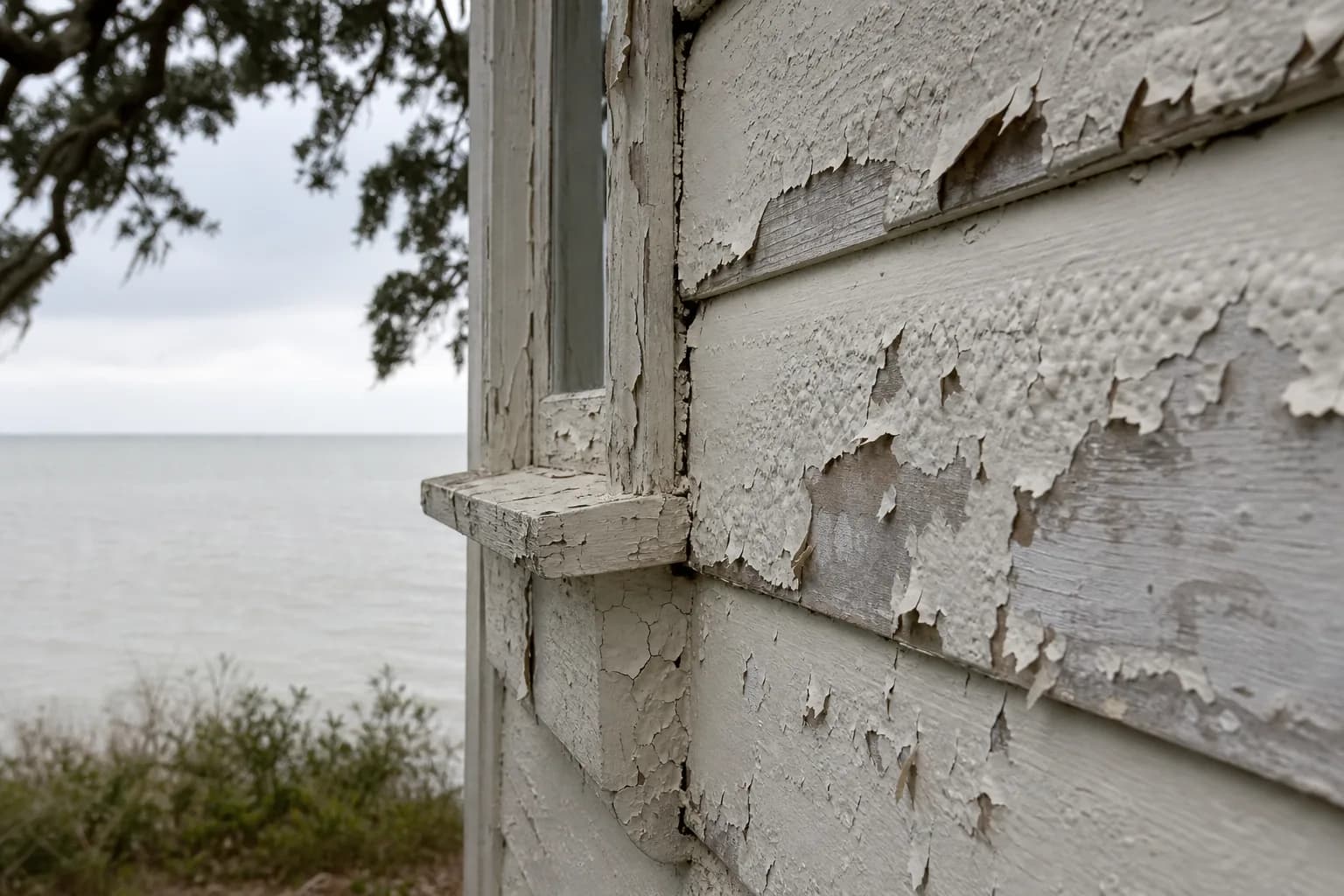
A paint job looks perfect for a season, then a bubble shows up on the south wall. A few weeks later it's a row of them, and by the next rainy stretch the paint is flaking off in sheets. If you've watched that happen on a Gulf Coast home and wondered why is my exterior paint peeling when the can promised ten years, the answer is almost never the paint. It's moisture — and our humid coastal climate gives it every chance it needs.
Peeling and blistering aren't the same failure, and they don't have the same fix. This is what's physically happening when coastal humidity gets under a finish, how to read which problem you've got, and the system that actually stops it from coming back. Get the cause right and you repaint once; guess at it and you repaint again next year. (If you also want to know how long a coat should last out here, that's its own question — see how often to repaint a house exterior on the Gulf Coast.)
Why does exterior paint peel on the Gulf Coast?
Exterior paint peels when the bond between the film and the surface breaks — and on the coast, the thing breaking that bond is almost always water. Paint is essentially a thin plastic skin glued to your siding. That skin needs two things to hold: a sound, dry surface to grip, and a way for moisture vapor to pass through it. Our climate attacks both.
Here's the chain of events behind most coastal peeling. Moisture gets to the wood — through a failed caulk joint, a bare spot, gutter overflow, sprinklers hitting the wall, or humid indoor air pushing out through the wall. The wood swells slightly as it absorbs that water. The paint film, glued to the surface, can't move with it, so the bond shears. Then, as the sun heats the wall and the moisture tries to escape as vapor, it shoves against the film from behind. Where the bond is already weak, the film lifts and lets go. That's peeling.
Why paint blisters in a humid climate
Blistering is moisture or heat trapped under an intact paint film, lifting it into bubbles. It's peeling caught one step earlier — and on the humid Gulf Coast it's extremely common.
Two versions show up here. The first is moisture blistering: water vapor moving out through the wall hits the back of the paint film and, with nowhere to go, pushes it into a bubble. This is why blisters cluster on walls that get afternoon sun after a humid night — the heat drives the trapped moisture hard against the film. The second is heat or solvent blistering: paint applied in direct, brutal sun skins over on top before the layer underneath can release its solvents, trapping them as bubbles. Either way, once a blister breaks, that spot loses its grip and starts to peel. Blisters are the early warning; peeling is the bill coming due.
How to tell peeling from blistering
Reading the failure pattern tells you what went wrong underneath — and what the fix has to address.
| What you see | What it is | Likely cause |
|---|---|---|
| Bubbles under intact paint | Blistering | Moisture vapor or heat trapped behind the film |
| Sheets or flakes lifting off | Peeling | Broken bond — water got behind it or weak prep |
| Cracking that curls at edges | Peeling (advanced) | Old, brittle film losing adhesion as moisture works in |
| Bubbles only in afternoon sun | Heat/moisture blistering | Trapped moisture driven out by direct heat |
| Failure along seams and trim | Peeling at joints | Failed caulk letting water behind the boards |
If you're seeing failure right along caulk lines, seams, and trim, water is getting in at the joints. If whole field areas are bubbling and flaking, you're likely fighting vapor moving through the wall or a finish that went on over damp wood. Both come back to moisture — and both are why understanding where moisture behind paint comes from on coastal homes is the real key to a lasting fix.
How to stop it from coming back
You can't lower the humidity on the Gulf Coast, but you can build an exterior paint job that stands up to it. The fix is a sequence, and skipping any step is how the failure returns.
Identify peeling vs. blistering
Bubbles under an intact film are blisters from trapped moisture or heat; sheets lifting off are peeling from a broken bond. The pattern points you to the cause.Find and fix the moisture source
Trace where water is getting in — failed caulk, bare wood, gutter overflow, sprinklers, or humid indoor air venting into the wall — and fix that first, before any paint.Scrape back to a sound, dry edge
Remove all loose and blistered paint, scrape to a firmly bonded edge, and let the substrate dry fully so you're repainting over sound, dry material.Re-caulk, repair wood, and spot-prime
Seal open joints and seams, treat soft or rotted wood, and prime every bare spot so the new coats bond and gain a moisture-resistant base.Repaint in a dry window with a breathable coating
Apply a quality, breathable exterior coating in a dry stretch at the right film thickness, so vapor can escape instead of building up and lifting the finish again.
The non-negotiable here is prep. We say it on every exterior job: prep is 80% of a paint job that lasts. Pressure-washing off the salt film and chalk, scraping to a sound edge, treating soft wood, sealing the gaps, and priming the bare spots is what gives the new coat something solid and dry to hold. A flexible, breathable topcoat then lets moisture vapor move through instead of pooling behind the film. That combination — stop the water, prep it right, breathe it out — is what beats coastal humidity. For the full picture, our exterior painting page and our coastal exterior painting guide walk through how we approach a Gulf Coast repaint start to finish.
The bottom line
Peeling and blistering on a Gulf Coast home are a moisture story, not a paint-brand story. Blisters are trapped moisture or heat lifting the film into bubbles; peeling is the bond breaking once water gets behind it. The cure is the same root move either way: find and stop the moisture, prep back to a sound dry surface, and repaint in a dry window with a breathable coating.
If your exterior is bubbling or flaking, don't just paint over it — that buries the problem for a season and brings it right back. We're a family-owned crew that's repainted coastal homes across Mobile and Baldwin County since 2013, and we'll diagnose the cause before we ever open a can. Reach out for a free in-home estimate and a written quote within 24 hours, backed by our 3-year workmanship warranty.