
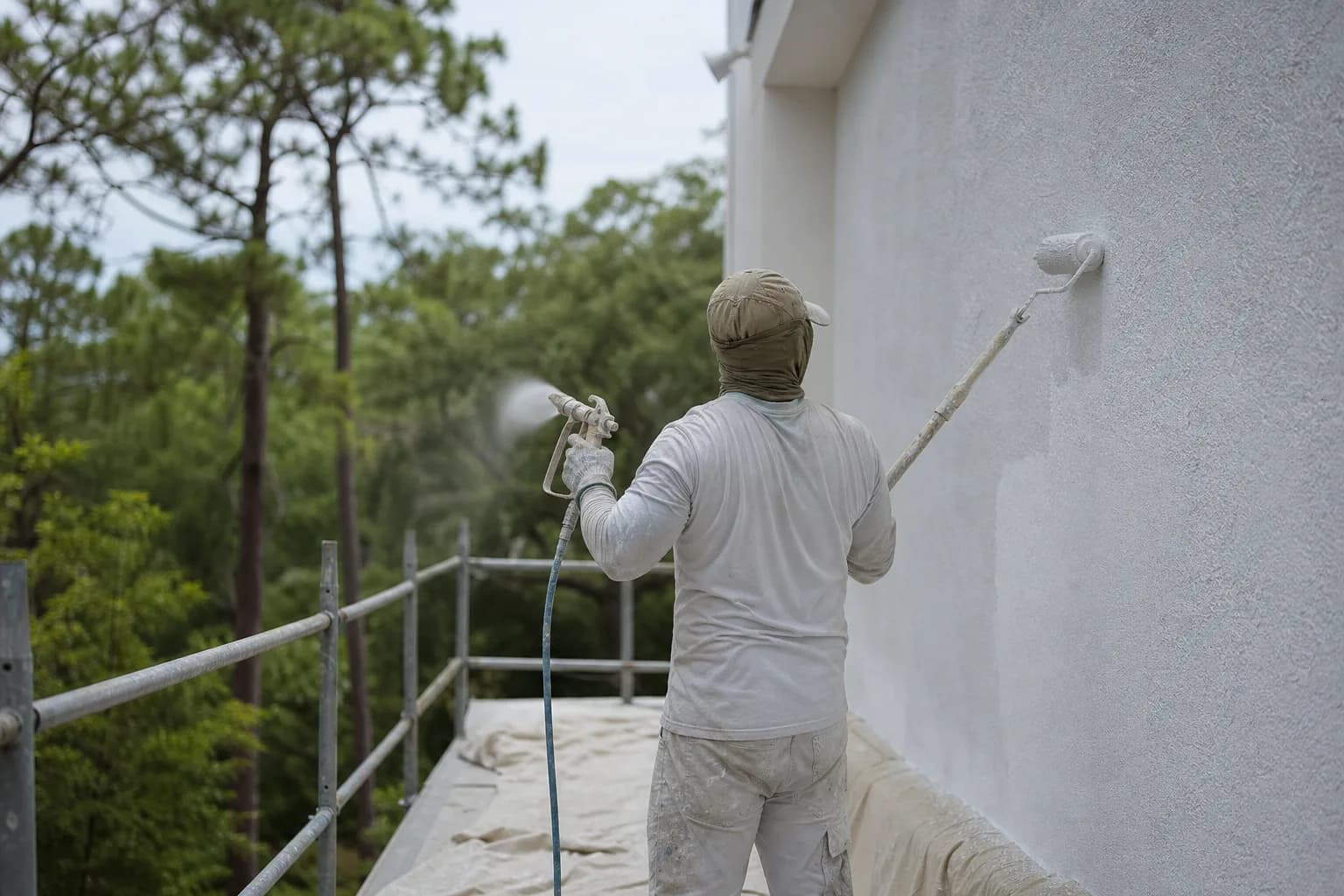
A stucco or block wall on the Gulf Coast takes a beating most walls never see: salt in the air, humidity around the clock, hard sun, and wind-driven rain every storm season. Elastomeric coating can armor that wall — its thick, flexible film bridges hairline cracks and sheds rain like nothing a paintbrush usually delivers. But here's the thing nobody at the paint store says out loud: with elastomeric, almost all of the result comes from how it's applied, not which bucket you buy.
This is the application playbook. We'll walk through the prep masonry actually needs, the mil thickness that makes the coating do its job, and where elastomeric genuinely shines on a coastal wall. (If you're still deciding whether your wall needs it at all, start with when to use elastomeric coating and when not to — this post assumes the wall is already a good candidate.)
Why application decides everything with elastomeric
Elastomeric works by reaching a specific film thickness on the wall. The crack-bridging, the waterproofing, the long life — all of it depends on the coating curing to the dry mil thickness the manufacturer specifies. Under-build that film and you've got an expensive paint that doesn't bridge cracks and doesn't waterproof. Build it over a dirty or damp wall and it lets go.
That's why a quality elastomeric applied carelessly will lose to a careful job every time. The product is the last 20%. The prep, the masonry diagnosis, and hitting the correct mil thickness are the 80% that decides whether the wall is protected for years or peeling in two seasons.
Prepping stucco and masonry for elastomeric
Answer-first: the wall has to be clean, dry, sound, fully repaired, and — where the masonry is bare or porous — primed, before a drop of elastomeric goes on. Masonry brings a couple of wrinkles ordinary siding doesn't, and skipping them is how good coatings fail.
A few masonry-specific realities shape the prep:
- Efflorescence. That chalky white bloom on masonry is mineral salt pushed out by moisture moving through the wall. Coating over it is coating over a loose layer — it has to be removed, and the moisture behind it understood, first. We walk through that whole process in removing efflorescence before you paint masonry.
- Porosity. Bare block and rough stucco drink coating unevenly. A masonry primer or the manufacturer's base coat evens out the suction so the film builds consistently instead of going thin over the thirsty spots — the same reason raw cinder block and CMU need a block filler before painting.
- New masonry needs to cure. Fresh stucco and block are full of moisture and start out too alkaline for a coating to bond well. They need to cure and dry — often a month or more on the coast — before a thick film goes on.
What mil thickness does elastomeric coating need?
Here's the part that separates a real elastomeric job from a thick-looking paint job. Every elastomeric product states a required wet mil and dry mil thickness on its data sheet, and reaching that dry mil number across the whole wall is the entire point of the coating. Hit it and you get crack-bridging and a waterproof shell. Miss it and you don't, no matter how good the product is.
A couple of things follow from that:
- It takes two coats. The required build is usually several times the thickness of ordinary paint and is reached over two coats. One heavy coat looks thick but rarely cures to spec evenly across a textured wall — it sags in some spots and goes thin in others.
- Texture and porosity raise the material. Heavily textured stucco and rough block have more surface area and more suction, so they need more material to reach the same dry mil build as a smooth wall. That's planned into the job, not discovered halfway through.
- It's measured, not eyeballed. We apply to the manufacturer's wet-mil number as we go, because under-building the film is the single most common elastomeric application failure.
| Application detail | Ordinary exterior paint | Elastomeric coating |
|---|---|---|
| Coats | Typically two | Two, built to a specified dry mil |
| Film build | Thin, standard | Several times thicker — high build |
| What 'done' means | Even color and coverage | Reaching the required dry mil thickness |
| Method on texture | Roll or spray | Spray and back-roll to work it into the texture |
| Most common failure | Thin coverage / poor prep | Under-built film + coating a damp wall |
The takeaway: with ordinary paint you're chasing coverage; with elastomeric you're chasing a measured film thickness. That difference is why it costs more in both material and labor — and why a cut-rate application is worse than not coating at all.
Our application sequence for coastal masonry
We apply elastomeric the same disciplined way every time, because the climate here doesn't forgive shortcuts. Here's the order we work through on a stucco or masonry wall.
Wash the wall clean
We pressure-wash off dirt, salt film, chalk, mildew, and pollen so the coating bonds to sound masonry instead of riding on a layer that's already letting go.Repair cracks and address efflorescence
We repair cracks to a sound state and remove any efflorescence — the white mineral salt that surfaces on masonry — since elastomeric bridges hairline cracks but can't cure structural ones or stick over loose mineral deposits.Confirm it's dry and cured
We make sure the masonry is dry with no moisture source behind it, and that any new stucco or block has fully cured, because a thick low-breathing film over damp or green masonry traps water and fails.Prime or base-coat where needed
Bare, porous, chalky, or patched masonry gets a masonry primer or the manufacturer's specified base coat so the elastomeric bonds and builds evenly instead of soaking in unevenly.Apply two coats to mil spec
We spray and back-roll two coats, working the thick film into the texture and building to the manufacturer's required wet and dry mil thickness — the step that actually delivers the crack-bridging and waterproofing.
Back-rolling matters more than it sounds. Spraying alone can bridge over the low spots in a textured wall without filling them; back-rolling pushes the coating into the texture so the film is continuous and the mil build is real across the whole surface.
Where elastomeric shines on the coast
Done right, this is where the thick film genuinely earns its keep on a Gulf Coast wall:
- Recurring hairline cracking. Stucco and masonry that keep developing fine cracks get a flexible film that bridges them and moves with the wall through the daily heat-and-cool cycle.
- Wind-driven rain on exposed walls. A weather-facing elevation or a wall near open water gets a waterproof shell that sheds storm rain instead of soaking it up.
- Big, hard-to-access masonry. Tall facades and parapets that are expensive to reach benefit from a durable, high-build coating that stretches the years between repaints.
The common thread is that elastomeric rewards walls with a real water or cracking problem and punishes shortcuts. For the wider coastal picture — every surface, not just masonry — our exterior house painting guide for the Mobile and Baldwin County coast lays out how we approach the whole envelope, and you can see the service itself on our exterior painting page.
When the wall's a good candidate and you'd rather not roll it yourself, you can have Pro 1 paint your masonry and stucco — prep, finish, and the coastal timing handled.
The bottom line on coating stucco and masonry
Elastomeric coating can armor Gulf Coast stucco and masonry against cracking and wind-driven rain — but only when it's applied right: a clean, dry, cured, properly repaired wall, primed where the masonry calls for it, and two coats built to the manufacturer's mil thickness. The film thickness is the whole product. Under-build it or coat a damp wall and you've spent good money on a finish that fails. Build it correctly on a sound, dry wall and you get years of protection.
The surest way to get that on your wall is to have someone read the masonry, confirm it's dry, and apply the coating to spec. We're a family-owned crew that has coated Gulf Coast walls since 2013, and every job carries our 3-year workmanship warranty with a manager sign-off before it's called done. Reach out for a free in-home estimate and we'll send a written quote within 24 hours — you can pay by Cash, Check, or Credit Card.