
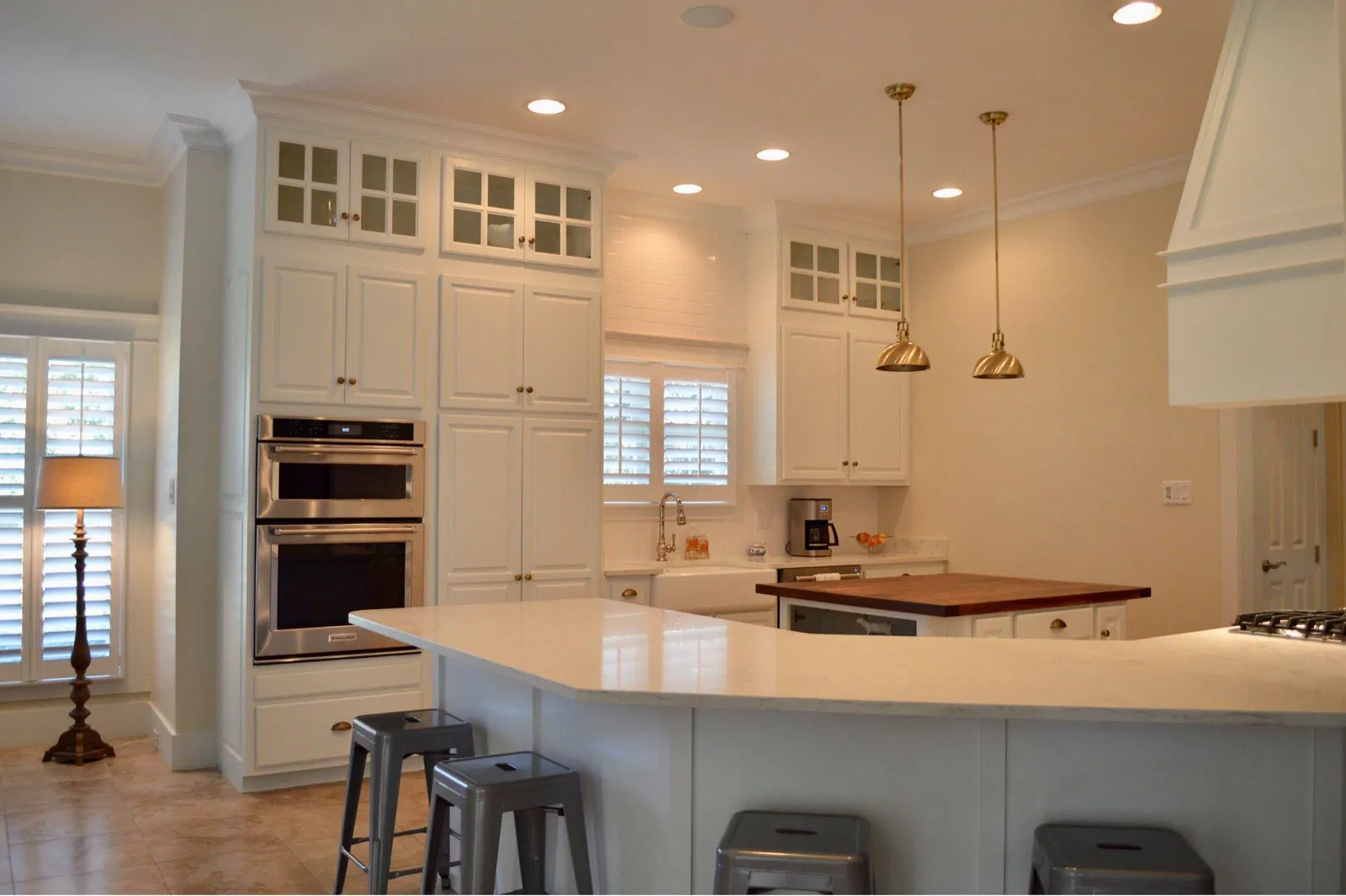
The right cabinet color can completely change the way your kitchen looks and feels. It can make a small kitchen feel bigger, a dark room feel brighter, and an outdated space feel brand new. But picking the perfect color isn't always easy. With so many options, it's hard to know where to begin.
Learning how to choose a paint color for kitchen cabinets can make or break your kitchen refresh. This guide covers everything you need to know to make a confident choice — from understanding your kitchen layout to following the latest cabinet color trends.
Understanding your kitchen's foundation
When learning how to choose paint colors for your kitchen, size is the most critical factor. Some colors make small kitchens feel open and spacious; others can make large kitchens feel cold or sterile.
Consider your kitchen size
For small kitchens, stick with muted or light colors like white, cream, sage green, or powder blue. These shades reflect light and make the walls appear to recede. High-gloss finishes or polished backsplashes enhance this effect. Two-tone cabinets are another great option — try navy or forest green base cabinets to add interest without crowding the space.
For large kitchens, you have more flexibility. Both light and dark shades can work, but balance is key. Pastel pink or baby blue can be overwhelming in a large space, while stark white can feel clinical. Instead, go for cozy yet clean tones like forest green, slate gray, dark-stained wood, or cream. A bold color on a large island is a smart way to introduce contrast.
For more on light-and-space tactics, see The Best Paint Colors to Make a Room Look Bigger.
Evaluate your lighting
Understanding your lighting is essential. Natural light plays a big role in how colors appear:
- South- or west-facing kitchens with warm light can handle cooler or lighter colors like white or sage. Eastern Shore homes facing Mobile Bay get strong morning light from the east — perfect for cooler whites. We see this play out across Mobile County too: the deep-set kitchens in older Midtown and Spring Hill homes read cooler and dimmer than the open, window-heavy layouts out in West Mobile, so the same chip can land very differently from one neighborhood to the next.
- North-facing kitchens with cool light should avoid stark white or ice blue, which make the room feel colder. Try warmer tones, gray-greens, bold colors, or a warm stain.
- Dim kitchens benefit from light-reflecting colors. Avoid dark shades unless you're going for a dramatic black-on-black look (which can paradoxically widen the space visually).
Match your design style
Your cabinet color should reflect the overall style of your kitchen and home:
- Traditional: Creamy white, beige, gray shaker cabinets, or dark-stained wood with light stone counters
- Transitional: Soft neutrals or muted greens, paired with natural wood elements — leaves room for a variety of style options
- Modern: Moody blues, calm greens, glossy finishes, or bold colors like red or sunny yellow help make a statement
Coordinating with existing elements
When selecting a cabinet color, consider the colors and style of the backsplash, countertops, flooring, and walls. Use a color wheel to pick complementary or contrasting cabinet colors based on what's already in the kitchen.
Countertops and backsplash harmony
For a natural look, combine earthy green cabinets with butcher block counters or stone backsplashes. To make your island a focal point, consider wooden slats painted in a bold tone. Texture matters too — try beadboard, color blocking, or mixing solid cabinets with a few glass-front options.
Flooring and wall color coordination
If you're keeping your wall color, make sure it doesn't clash with your cabinets. Neutral wall shades like cream, white, or gray give you the most flexibility. Doing a full remodel? Use the space between your base and wall cabinets as an opportunity for a bold accent wall. Also consider:
- Two-tone cabinets to create depth
- Matching surrounding room tones for visual flow
- Wooden slats or dowels for the island
The right mix of color and texture helps create a cohesive, long-lasting design.
2026 kitchen cabinet color trends
Warm neutrals
Warm neutrals are trending heavily. Popular choices include Sherwin-Williams Accessible Beige SW 7036 and Sherwin-Williams Agreeable Gray SW 7029. Even deep reds and burgundies are making a comeback (Sherwin-Williams Rookwood Red SW 2802 is a bold-but-classic option). Neutral shades are more versatile, timeless, and pair well with many design options.
Deep earthy tones
Moody hues like Sherwin-Williams Gauntlet Gray SW 7019, Sherwin-Williams Dovetail SW 7018, and Sherwin-Williams Pewter Green SW 6208 add depth and personality. These work especially well on lower cabinets or islands. Pair these bold colors with lighter upper cabinets for a dramatic but balanced effect.
Soft whites and off-whites
White cabinets took a back seat to bolder neutrals for several years, but they're back in 2026. Whites like Sherwin-Williams Pure White SW 7005 and Sherwin-Williams Alabaster SW 7008 avoid the starkness of bright white while maintaining a clean look. These neutral cabinets leave the door wide open for a variety of countertop, backsplash, and accent color choices, and they pair beautifully with gold or matte black hardware.
Two-tone combinations
The contrast of two tones is appealing and adds interest. Two-tone options expand the possibilities meaningfully:
- Navy, forest green, black, or charcoal base cabinets with white, muted gray, or blush on the uppers
- A natural wood finish on the island with painted perimeter cabinets
- Dark gray stain on lowers with white or cream on uppers
This approach adds depth and lets you play with color safely.
Practical selection tips
Testing and sampling
Always test samples directly on your cabinets. Observe them throughout the day to see how lighting affects appearance. Peel-and-stick color samples are a good option before committing to a color.
Portable sample boards or applying paint to a poster board help if you want to test different spots before applying. Another option: paint two coats on a square of drywall and move the sample around the kitchen across different lighting conditions before deciding.
You can also upload a photo of your room to Sherwin-Williams' Color Visualizer tool to preview your dream kitchen virtually.
Long-term considerations
Choose a color that you love, that's timeless, and that appeals to a potential home buyer if you're planning to sell in the near future. Also consider how easy the cabinets will be to maintain over time.
- Match colors to your personal style (look at your wardrobe or home furnishings for clues)
- Stick to neutrals if you're thinking about resale — see Should You Paint Kitchen Cabinets Before Selling
- Think about how you use your kitchen — quiet retreat vs. family hub
- Coordinate colors with nearby rooms for smooth visual flow
Professional vs. DIY considerations
Often the hardest decision isn't picking the color — it's deciding whether to hire a professional or DIY the job. A few tips:
- Consider hiring a pro for bold or dark colors that require precision and even film thickness
- Use high-quality paint — Sherwin-Williams Emerald Urethane Trim Enamel is the gold standard
- Satin or semi-gloss finishes are easier to clean and more durable than matte
- Natural wood? Try staining instead of painting to highlight the grain
For more on the refresh-without-remodel approach, see The Best Way to Refresh Kitchen Cabinets Without a Full Remodel.
What are the most common cabinet color mistakes?
Feel like you're ready to pick the perfect cabinet color? There are common mistakes that turn confident choices into regrets:
- Ignoring lighting conditions. A swatch that looks beautiful in the showroom can read completely different in your north-facing kitchen at 4 PM.
- Not considering kitchen size. Dark colors in a small kitchen can close the space; pastels in a large kitchen can feel underwhelming.
- Choosing colors in isolation. Cabinet color has to work with the floor, countertop, backsplash, and wall color simultaneously.
- Skipping the sample phase. This is the #1 mistake. Always test in your actual kitchen, in actual lighting, across actual times of day.
- Following trends without considering your personal taste. Trends come and go; you'll live in the kitchen for 10+ years.
- Underestimating prep. The wrong primer, insufficient sanding, or skipped degreasing will undo any color choice.
Choose a paint color for your cabinets with confidence
The right cabinet color refresh can transform your kitchen from dated to dramatic, all without the cost or disruption of a full remodel. The key is balancing your personal style with practical considerations — size, lighting, existing materials, and resale value.
If you're stuck, we can help. A free color consultation at your kitchen — usually 30–45 minutes — walks through your floor, countertops, lighting, and natural light to narrow the options to 2–3 finalists. From there, we sample, you decide, and we paint.
Schedule your free consultation or call (251) 621-1100. Most cabinet projects in Mobile, Daphne, Fairhope, and Spanish Fort wrap up in 5–8 business days.