
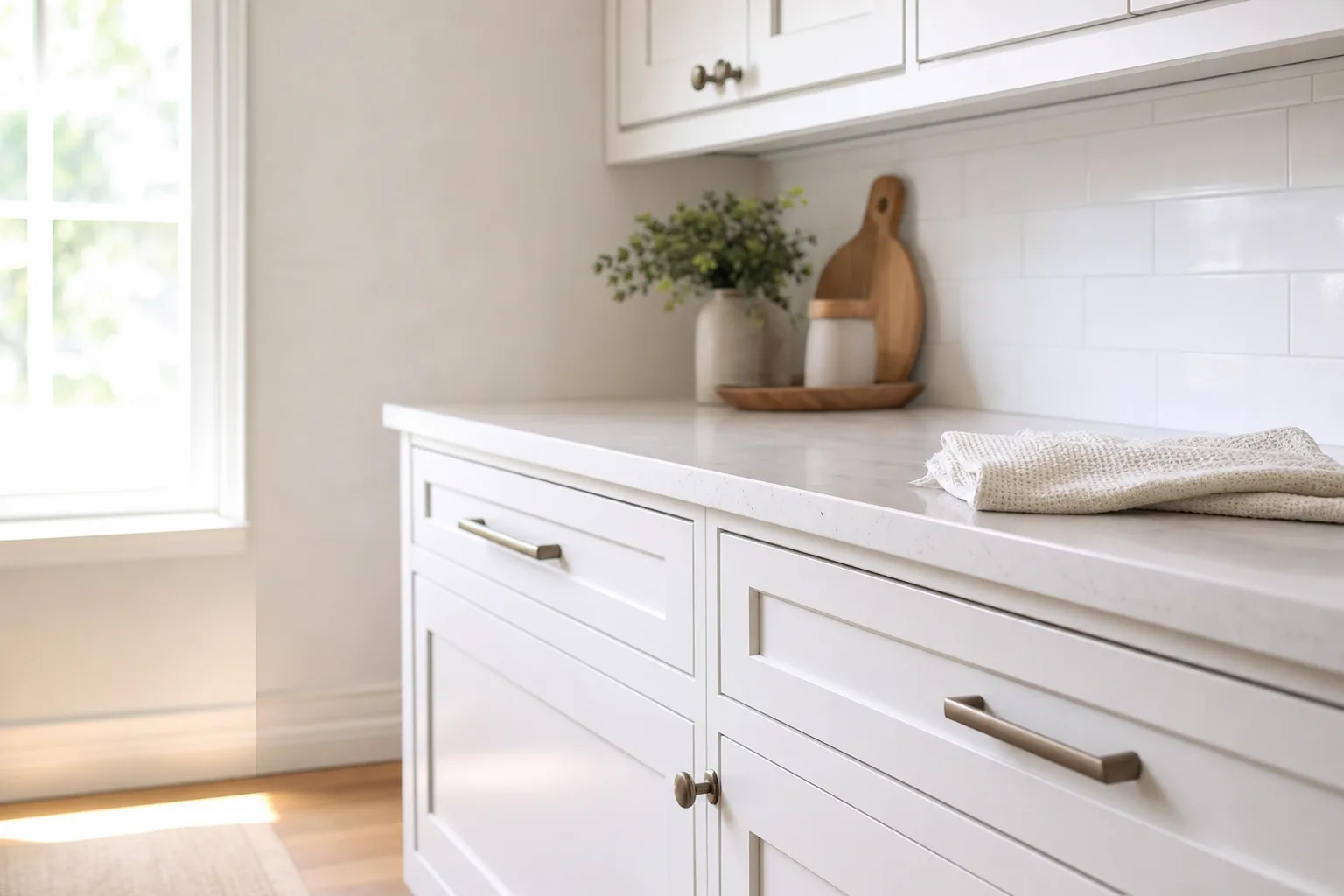
If you’re wondering how to clean painted kitchen cabinets without removing the finish, this guide is for you. Painted kitchen cabinets can make your kitchen feel bright and clean — but only if they stay that way.
Painted cabinets come in a wide range of colors and add a personal touch to your kitchen. Like most cabinets, grease, dust, and sticky spots build up fast. Without the right care, the paint may peel, stain, or fade.
We’ll walk through simple, effective ways to clean, maintain, and protect your painted cabinets for years to come. We’ve finished and serviced cabinets in kitchens all over Mobile — from Midtown and Spring Hill bungalows to newer West Mobile builds — and on the Gulf Coast the humidity makes good cleaning habits matter even more. If you’re also looking for a fast visual update without a remodel, explore how to refresh kitchen cabinets .
Why Cleaning Painted Kitchen Cabinets Is Important
Kitchen cabinets are exposed to heat, moisture, grease, and cooking residue every day. Left untreated, grease and grime can:
-
Break down paint over time
-
Cause discoloration and stains
-
Lead to peeling, cracking, or warping
Regular cleaning helps maintain the look and extend the life of your cabinets. If you’d rather leave the job to a pro, a kitchen cabinet painter can help restore durability and appearance.
What to Know Before Cleaning Painted Kitchen Cabinets
Understanding your cabinet paint and finish helps you choose the right method. Different paints and finishes respond to cleaners in unique ways, so knowing whether your cabinets were coated with durable cabinet paint or a more delicate standard house paint will guide you toward the safest approach.
Paying attention to whether your finish is matte, semi‑gloss, or satin also makes a difference, since each has its own cleaning strengths and sensitivities.
Specialized Cabinet Paint vs. Standard House Paint
-
Cabinet paint is made for moisture and wear — it’s more durable and easier to clean.
-
Standard house paint can be more delicate and easier to damage.
Matte vs. Semi-Gloss Finishes
-
Semi-gloss is easier to clean and resists grease.
-
Matte shows stains more easily and needs extra care.
If you’re prepping for a color change or a touch-up, see our step‑by‑step prep guide on how to clean cabinets before painting .
How Often Should You Clean Painted Kitchen Cabinets?
Make cabinet care part of your routine. Don’t think of cleaning as a chore, but as part of protecting your investment and keeping your kitchen looking inviting.
Establishing a regular schedule ensures stains and grease never have time to cause permanent damage. If you cook often then it’s especially important to follow these cleaning habits to keep your cabinets in great condition:
-
Immediately: Wipe spills and splatters right away.
-
Weekly: Clean exterior surfaces to remove dust and grease.
-
Every few months: Deep clean inside and out.
Still wondering what’s the best way to clean painted kitchen cabinets? Keep reading — we explain each step clearly.
Daily and Weekly Cleaning Routine
Your cabinets don’t need harsh scrubbing every day, but they do benefit from small, consistent efforts. These simple daily and weekly routines help prevent grease buildup and keep your painted cabinets looking fresh.
Daily Cleaning: Quick Maintenance
-
Use a soft microfiber cloth to remove dust and light surface dirt.
-
Spot clean stains with mild dish soap and warm water.
-
Avoid abrasive cleaners like Magic Erasers.
-
Always dry cabinets thoroughly.
Weekly Cleaning: Preventing Buildup
-
Mix warm water with mild dish soap like Dawn.
-
Wipe with a soft cloth.
-
Rinse and dry completely.
Following this routine will prevent buildup and protect your cabinets.
What to Clean Kitchen Cabinets With
A safe cleaner like mild dish soap, warm water, and a microfiber cloth cleans effectively without stripping the finish. For the products themselves — what to reach for and what to avoid — see our cleaner picks for painted cabinets.
Avoid these products, since they are either too harsh, leave behind damaging residue, or strip the protective finish from your cabinets:
-
Bleach
-
Ammonia
-
Soft Scrub
-
Abrasive sponges
-
Strong degreasers
How to Clean Sticky Kitchen Cabinets
Sticky residue is common near stoves. Over time, it builds up on surfaces — especially on cabinets near your oven and cooktop. Here’s how to clean sticky kitchen cabinets:
-
Mix warm water with mild dish soap.
-
Use a damp (not soaked) microfiber cloth.
-
Wipe gently.
-
Rinse with clean water.
-
Dry thoroughly.
For stubborn spots, try baking soda paste or diluted vinegar (test first).
Best Way to Clean Painted Kitchen Cabinets Without Removing the Finish
If you’re wondering how to clean kitchen cabinets without removing the finish, follow these tips:
-
Use pH‑neutral cleaners — they clean effectively without breaking down paint or dulling the finish.
-
Avoid harsh chemicals — bleach and ammonia can discolor paint and weaken protective coatings.
-
Test new products in hidden spots — this ensures they don’t cause staining, cloudiness, or damage before you apply them to visible areas.
-
Clean with microfiber cloths — they lift dirt gently without scratching the painted surface.
-
Dry right after cleaning — excess water left behind can seep into seams and cause warping or peeling.
The best approach protects the finish while removing grease and grime.
Can You Use Popular Cleaning Products on Painted Cabinets?
Is Murphy’s Oil Soap good for painted cabinets?
Not recommended. It can leave a film.
Can you use a Magic Eraser on painted cabinets?
Only for small spots on semi‑gloss. Avoid on matte or satin.
Can I use Windex on painted kitchen cabinets?
No. It contains ammonia, which can damage paint.
A safer alternative is a few drops of mild dish soap in warm water, with baking soda for extra degreasing when needed.
Can I use Dawn dishwashing liquid on painted kitchen cabinets?
Yes. As long as you dilute it. Dawn cuts grease without harming paint. Always rinse and dry after.
How to Clean and Polish Kitchen Cabinets for Extra Shine
Once the dirt and grime are gone, polishing protects and adds shine. Clean and polish every 3–4 months to keep painted cabinets looking new.
-
Clean with soap and water.
-
Apply cabinet‑safe polish.
-
Buff with a microfiber cloth.
Long‑Term Maintenance Tips to Keep Cabinets Looking New
Consistent care helps your cabinets stay fresh and damage‑free for longer. Keep these practical tips in mind:
-
Wipe down cabinets after cooking.
-
Avoid excess water when cleaning.
-
Rinse and dry thoroughly to protect the finish.
-
Dust and polish regularly.
-
Use cabinet liners to keep interiors cleaner.
-
Avoid abrasive sponges and cleaners.
If you’re deciding on a future upgrade, learn the difference between cabinet painting and refinishing .
Final Tips for How to Clean Painted Kitchen Cabinets
Keeping your kitchen cabinets looking like new adds beauty to your home. A few simple steps go a long way.
The best way to clean painted kitchen cabinets is straightforward: use soft cloths and mild soap, avoid harsh chemicals, and rinse and dry thoroughly. Follow a regular routine and your cabinets will stay clean and protected for years to come.
If you’re planning any upcoming painting projects, contact our team of professional house painters today to request a free estimate and let our experts bring your vision to life.