
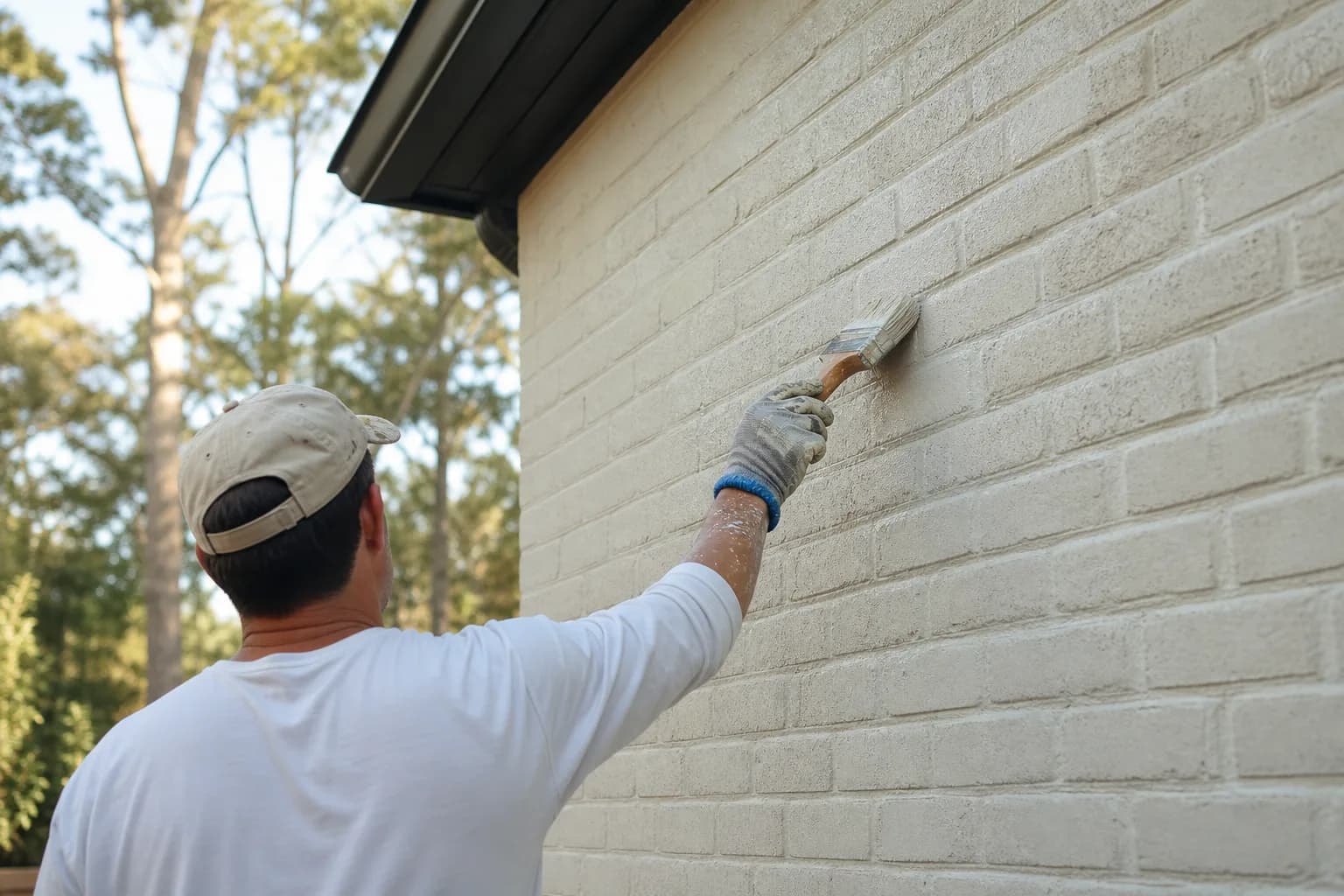
Painted brick can look incredible — and it can also fail in an ugly, expensive way that has nothing to do with the color. A year or two after the job, the paint starts lifting in patches, or the brick face itself begins flaking off in chips. Almost every time we see it, the cause is the same: moisture got trapped inside the wall. The paint sealed the brick like a plastic bag, the water couldn't get out, and it pushed the finish (or the brick) apart from the inside.
So the real skill isn't applying paint to brick — anybody can do that. It's painting it so the wall can still breathe, and that starts with the product: the best paint for brick exterior in our climate is a breathable one. This is how to paint brick without trapping moisture on the Gulf Coast: why brick has to dry outward, what "breathable" actually means, and the prep and products that let our humid-climate walls hold a coat for the long haul. (If you're still deciding whether to paint at all, start with the honest pros and cons of painting a brick house here — this guide is about doing it right once you've decided.)
Why is trapped moisture the whole problem with painting brick?
Answer first: brick is porous on purpose, and it manages water by absorbing it and then drying outward through its face. That's the mechanism you cannot break. Paint the brick with a sealing, non-breathable coating and you cut off the drying path — moisture from rain, humidity, or the wall behind gets stuck inside the brick. When it finally tries to escape, it forces the paint off (peeling) or, worse, breaks pieces off the brick face itself (spalling). Both are moisture failures, not color failures.
Our climate makes this the central issue rather than a footnote. Constant humidity, heavy rain, and salt air mean a coastal brick wall is dealing with moisture nearly all the time. A wall that can keep drying out shrugs it off; a wall sealed under the wrong paint has nowhere to send the water. That's the same trapped-moisture mechanism behind a lot of coastal humidity peeling and blistering failures — on brick it just hits harder, because the masonry itself can be damaged.
Breathable masonry paint and mineral paint, explained
The fix is using a coating that lets water vapor move through it. That property is called vapor permeability (you'll see it given as a perm rating), and it's the spec that matters most for brick.
- Breathable masonry paint. A high-permeability exterior masonry paint is formulated to let water vapor pass through the film while still resisting liquid water and UV. This is the standard, reliable choice for most painted brick.
- Mineral (silicate) paint. Mineral paint goes further — instead of forming a film on top of the brick, it chemically bonds into the masonry and stays extremely breathable. On the right brick it's an excellent, very durable option, which is why people ask about mineral paint for brick specifically.
What you want to avoid is a standard, film-forming exterior paint that seals the surface. It may go on fine and look great for a season, but on a porous coastal brick wall it's the recipe for trapped moisture down the line.
It's worth noting that breathability is also exactly why limewash is a popular brick option on the coast — it's about as breathable as a finish gets. Limewash gives a different, mottled look and behaves differently than paint, so it's its own decision, but the principle is the same one driving everything here: let the wall breathe.
How to paint brick without trapping moisture, step by step
Breathable paint is only half of it. The prep is what actually keeps water out of the wall and lets it dry. Here's the sequence.
Confirm the wall is dry and leak-free
Fix any active leak, gutter overflow, or grading issue sending water at the wall first, and make sure the brick is genuinely dry. Coating damp brick traps that moisture in from day one.Repair the mortar joints
Rake out and repoint cracked, crumbling, or missing mortar before you paint. Failed joints are the easiest way for water to get into the wall, and paint can't fix or hide them.Clean the brick thoroughly
Wash off dirt, mildew, and any chalky efflorescence, and remove loose or flaking material so the coating bonds to sound masonry rather than to grime.Let the brick dry all the way through
Give the masonry days to dry deep, not just at the surface — especially in our humidity. Priming or painting too soon seals leftover moisture inside the wall.Prime, then topcoat with a breathable system
Use a breathable masonry primer, then two coats of vapor-permeable masonry paint (or a mineral paint). Keep the whole system breathable so the wall can release moisture through it.
Two coastal notes. First, mortar repair really does come first — repointing isn't an upsell, it's the part that keeps water out of the wall in the first place, and it's specialized masonry work worth doing right. Second, timing matters in our humidity: high moisture in the air slows drying, so the brick must be fully dry before you start, and you want a dry, mild stretch for the job. That's the same logic behind choosing the best time to paint a house exterior in coastal Alabama — give the coating the conditions to cure and the wall the chance to keep breathing afterward.
Get the brick right the first time
Painting brick is close to a one-way decision — going back to raw brick is messy and expensive — so trapped moisture isn't a small risk to wave off. The whole job comes down to one principle repeated at every step: keep liquid water out of the wall, and let water vapor get back out. Sound mortar and dry brick keep the water out; a breathable primer and breathable masonry or mineral paint let the vapor escape. Do both and painted brick holds beautifully, even in our climate. Skip either and you're fighting the wall.
Because the prep — mortar repair, real drying time, the right breathable system — is where brick jobs are won or lost, it's a project worth handing to a crew that does masonry painting for our coast. Our exterior painting team repairs the mortar, preps the brick, and uses breathable systems built for Gulf Coast humidity, and the full coastal exterior painting guide puts brick in context with the rest of an exterior job. When you're ready, reach out for a free in-home estimate and a written quote within 24 hours.