
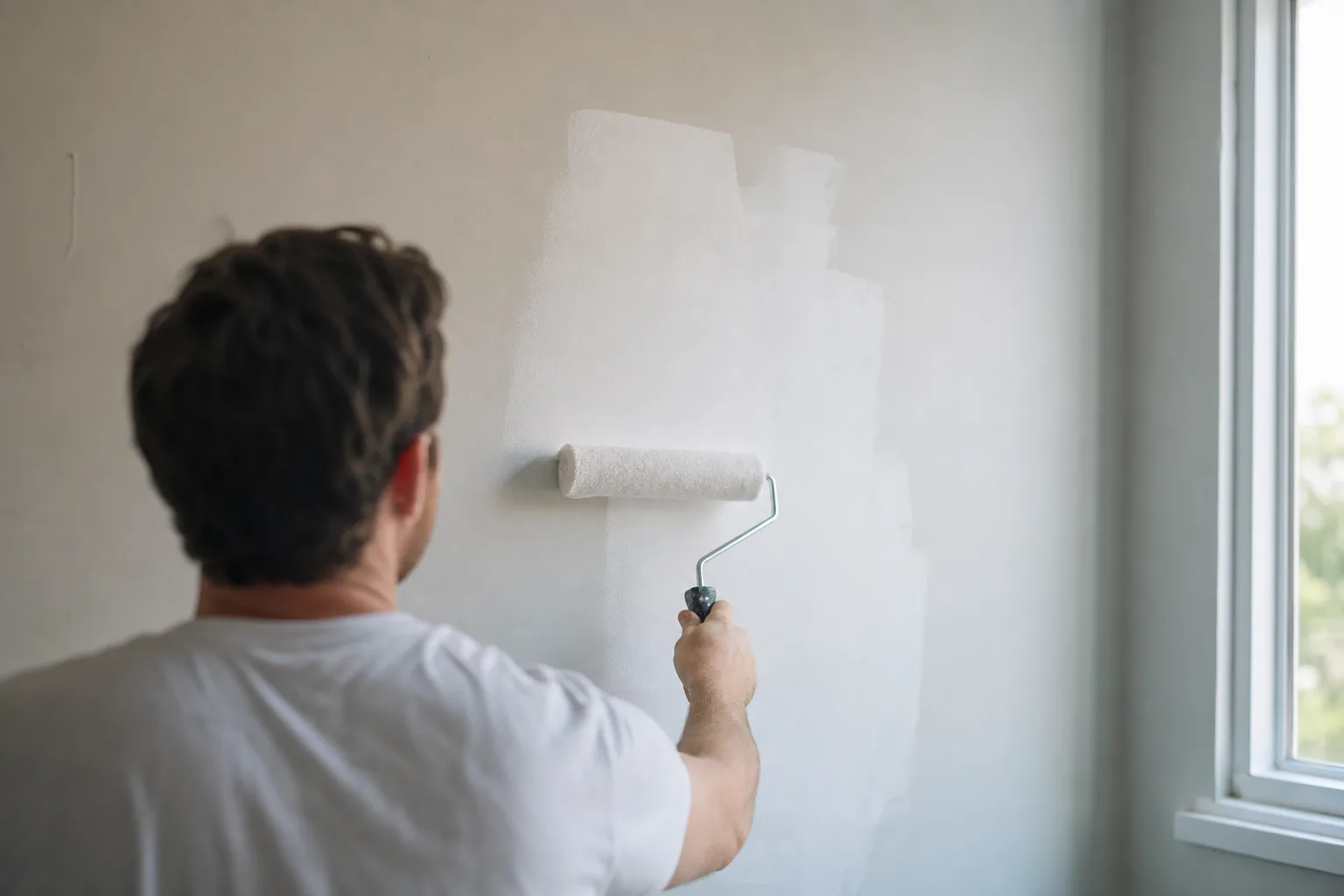
You patched the wall, sanded it smooth, and rolled two coats of paint over it — and you can still see exactly where the repair was. In the right light it shows up as a dull, slightly different spot, like a ghost of the patch underneath. It's one of the most common questions we get, and the answer is almost always the same: the patch didn't get primed. Primer on a drywall patch isn't an optional extra step — it's the thing that keeps the repair from telegraphing through your finish coat.
Here's what's actually happening when a patch shows through, the two words that explain it — suction and flashing — and why a coat of primer is what makes the repair disappear.
Why an unprimed patch shows through the paint
Answer first: a patch is two completely different surfaces sitting next to each other, and they drink paint at different rates. The bare joint compound (or new drywall paper) is thirsty and porous. The old painted wall around it is sealed and far less absorbent. Roll paint across both and the porous patch pulls more of it in, while the sealed wall holds it on the surface. That difference is why the patch ends up looking different even under the same paint.
The technical word for how much a surface pulls paint in is suction. High-suction areas like raw compound soak up the liquid and the binders in it; low-suction areas like an old finished wall don't. Until you even that out, every coat of paint you add gets absorbed unevenly — which is exactly the problem you're trying to paint away.
What does "flashing" mean on a patch?
Flashing is the name for that visible repaired spot showing through the finish — a difference in sheen or color where the patch is, usually most obvious in raking light across the wall. It's the direct result of the suction problem above: the patch absorbed the paint differently, so it cured differently, so you can see it.
Two coats of color won't fix flashing, and that surprises people. Adding more finish paint doesn't change the underlying mismatch in absorption — the patch keeps behaving like a sponge and the wall keeps behaving like a sealed surface. You can burn through a lot of expensive finish paint chasing an even look that one coat of primer would have delivered. This is the same reason walls need primer before painting in plenty of other situations, and it's worth understanding what paint-and-primer-in-one really does before assuming it handles a bare repair — over raw patches, a dedicated primer is the reliable move.
How primer on a drywall patch fixes it
Primer is formulated to seal a porous surface and create a uniform base for paint. Brush or roll it over the bare patch and it equalizes the suction — now the repaired area and the surrounding wall absorb the finish coat the same way. The paint cures to one consistent sheen across the whole surface, and the patch stops flashing. One coat of primer does what extra color coats can't.
A few practical notes on doing it right:
- Product. A quality water-based drywall or PVA primer seals most patches and joint compound. Over a water stain, smoke, or other stubborn mark, reach for a stain-blocking primer so it can't bleed through — the same logic behind choosing the right primer for stains, smoke, and water marks.
- How much. Spot-priming the bare patch and a bit of the area around it is usually enough to even the suction. On a wall with several repairs, a large patch, or a sheen change, priming the whole wall corner to corner gives the most seamless result. We make that call per wall.
- The other half. Primer fixes the sheen-and-suction problem, but it can't fix a surface that doesn't match. If the wall has texture, the patch has to be textured to match — knockdown, orange peel, or smooth before priming, or the repair still shows as a smooth island in a textured wall.
Get the repair to disappear the first time
A drywall repair that truly vanishes comes down to two things working together: the patch sealed with primer so it doesn't flash, and the texture matched so the surface blends. Miss either one and the repair shows — which is why patching and painting really are one job, not two, and why splitting them between a handyman and a painter so often leaves a visible scar. Our full drywall repair and texture matching guide walks through the whole process, and why drywall repair and painting is one job explains why one crew that does both gives you a seamless wall.
If you'd rather not chase a flashing patch around the room, our drywall repair and painting team repairs, primes, textures, and paints so the wall reads as one clean surface. Reach out for a free in-home estimate and a written quote within 24 hours.